
Muscle gain: build, don't balloon.
A bulk isn't a season of excess. It's a calibrated energy window — modest surplus, macros held steady, a program that actually progresses, tracking that filters out the noise. The goal: walk out of the phase with more muscle than fat, and a reasonable cut waiting on the other side.
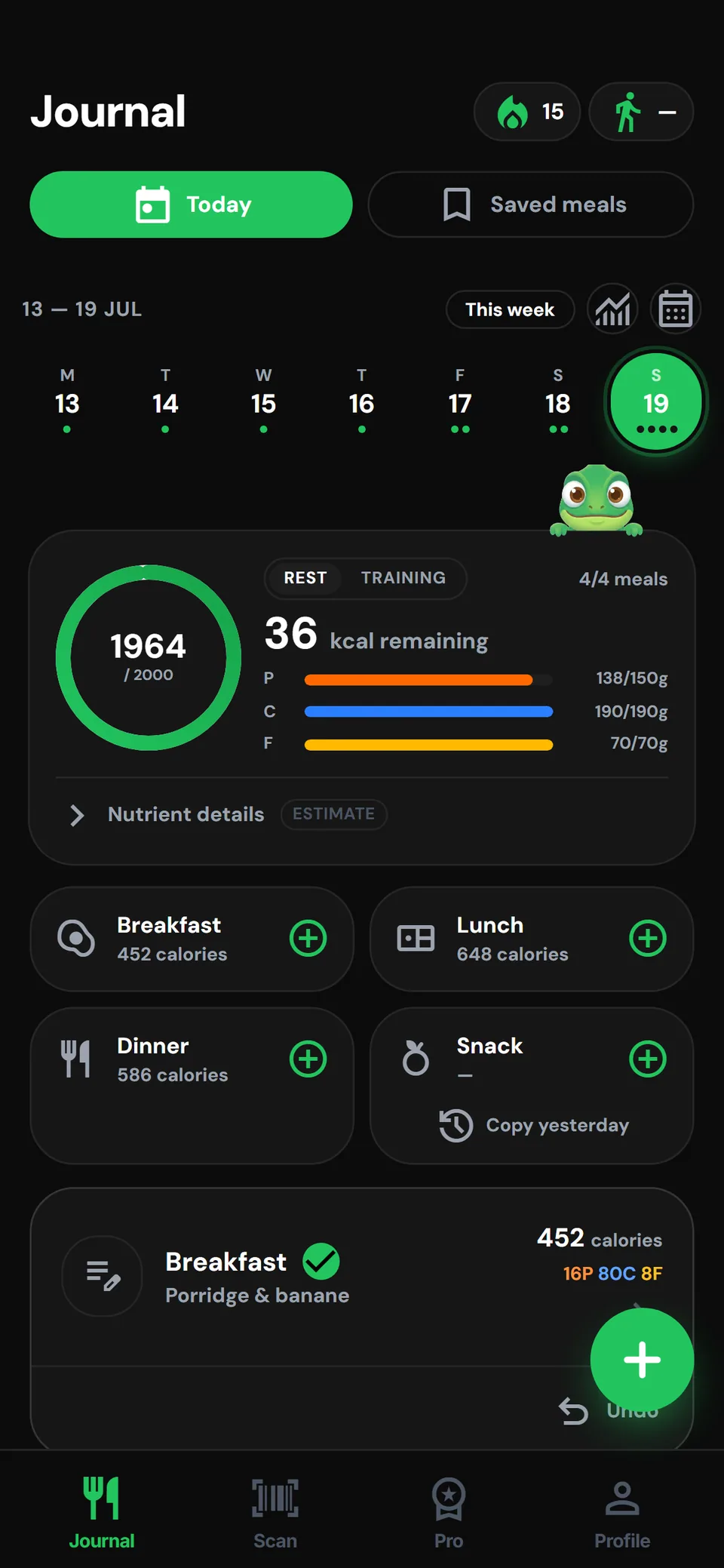
This guide gives you the full method: dial in your surplus, set your macros, pick a training split, read the real trend of your weight, adjust without panicking. Anything you calculate here, you can track directly inside ZymFit — free on iOS and Android.
Why aim for a clean lean bulk.
A bulk isn't a license to eat whatever you want for six months. It's a calibrated energy window — enough to build muscle, not so much that you spend the next phase cutting away half of what you gained.
A dirty bulk — eating in a massive surplus without watching what's on the plate — works on paper. You put on size, sure, but a big chunk of it is fat. Six months later, you're left with a few pounds of real muscle, a lot of fat to drop, and a chipped motivation.
A lean bulk works on a different idea: a modest surplus (5 to 15% above maintenance), steady macros, measured progress. You gain slower, but what you gain is more usable. The cut that follows is shorter, less painful, and your energy stays steady the whole way through.
There's no perfect surplus number. What exists are reasonable ranges and the discipline to adjust. That's exactly what we're about to walk through.
Dialing in your calorie surplus.
A muscle gain phase starts with one number: how many calories you eat versus how many you burn. The surplus is the gap between the two. Nothing more mysterious than that.
Estimating your TDEE
Your TDEE (Total Daily Energy Expenditure) adds up your basal metabolic rate, daily activity, and training. You can estimate it with a standard formula (Mifflin-St Jeor times an activity factor of 1.4 to 1.8 depending on your lifestyle), then fine-tune it against what the scale tells you over two weeks.
Picking a reasonable surplus
A surplus of 5 to 15% above your TDEE covers most situations. For an intermediate lifter, that usually lands at +250 to +500 kcal per day. The more advanced you get, the smaller the surplus can be (your body builds muscle slower at that stage, so piling on calories doesn't help).
ZymFit's default setting
When you pick the "muscle gain" goal in the app, ZymFit applies a +400 kcal surplus on top of your estimated TDEE by default. It's a middle-of-the-road value that works for most people — and you can nudge it up or down based on what your weight trend shows after two or three weeks. The idea: start reasonable, watch, adjust.
Splitting up your macros.
Total calories decide whether you gain or not. Macros decide what kind of weight you gain. Muscle or fat, energy or fatigue, recovery or plateau — it all starts here.
Protein: 0.7 to 1.0 g per pound
That's the research-backed range for hypertrophy (roughly 1.6 to 2.2 g per kilo). Below it, you cap your muscle protein synthesis. Above it, there's no extra benefit — just more nitrogen to flush. For a 165 lb lifter, that's 120 to 165 g of protein per day, spread across 3 to 5 meals.
Fat: 0.35 to 0.5 g per pound
Fat keeps your hormones running, testosterone included. Drop below that range for too long and you risk tanking your hormonal output and recovery. Stick to the good sources: olive oil, avocado, nuts, fatty fish, egg yolks.
Carbs: the fuel that fills the rest
Once protein and fat are locked in, carbs take whatever calories are left. They're the main fuel for your training. On a heavy training day, you can easily land at 2 to 3 g per pound. Best sources around workouts: rice, sweet potato, oats, whole-grain bread, fruit.
Crunch the numbers once, track them daily
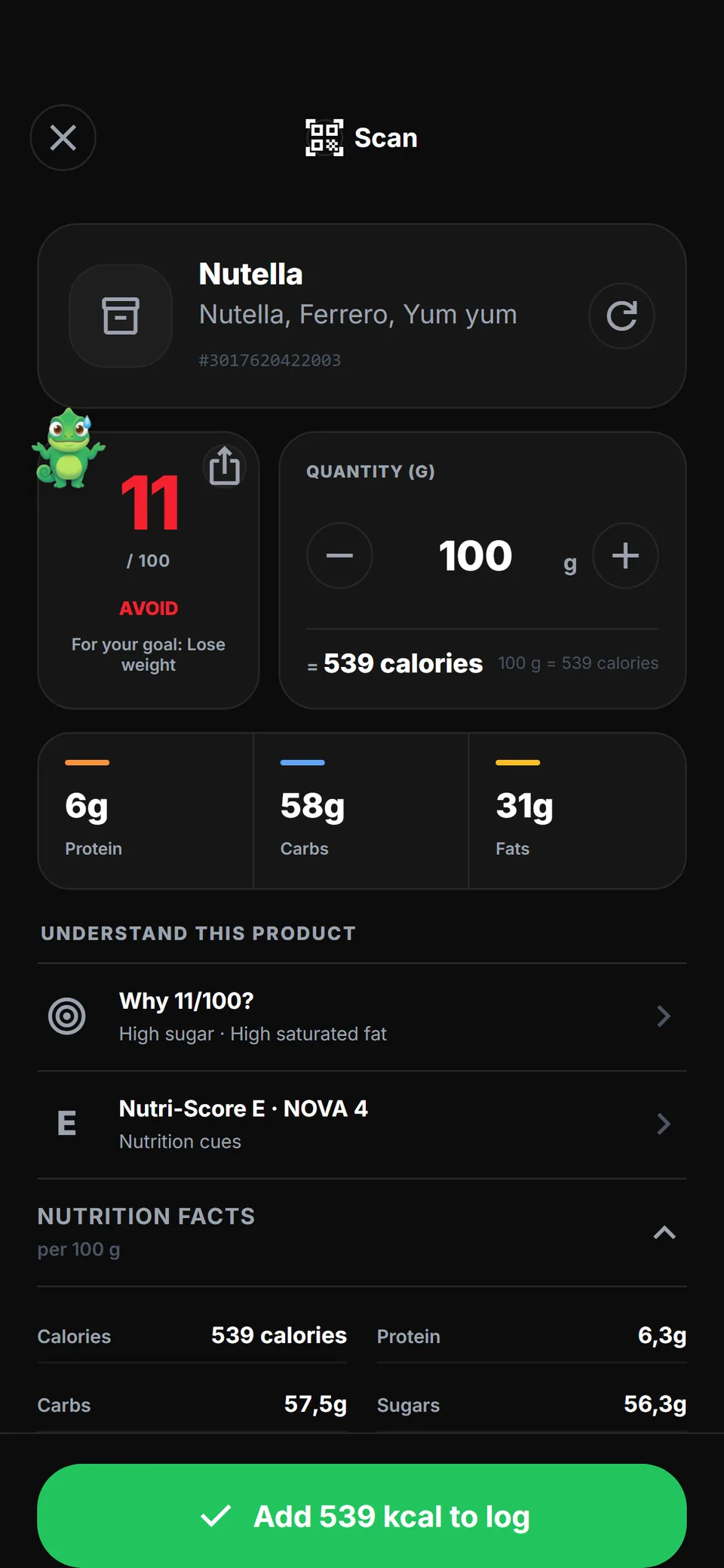
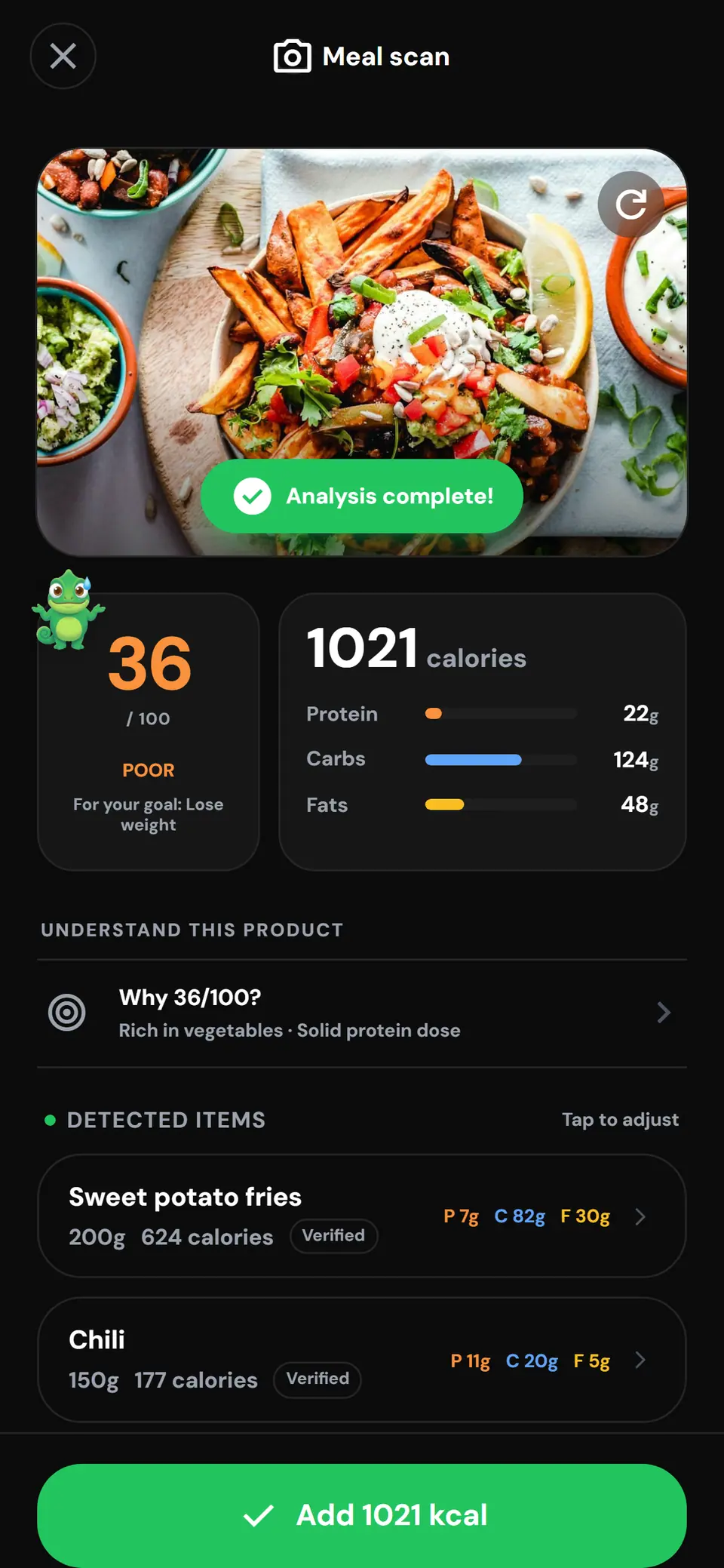
You can do the math by hand, or let ZymFit pull it straight from your profile. From there, the app gives you three ways to log meals: AI photo scan, barcode scan, and manual search. New to macros? We wrote a dedicated guide on calculating your surplus and macros for muscle gain.
Building a hypertrophy program that actually progresses.
Without mechanical load, a calorie surplus doesn't build muscle — it builds fat. Your training is the signal that tells your body where to send the extra nutrients.
Pick a split that fits
Three classic splits work. Push/Pull/Legs (6 days/week) for advanced lifters with the time to spend. Upper/Lower (4 days/week) for a solid balance of frequency and recovery. Full Body (3 days/week) for beginners or packed schedules. No split is objectively best: the best program is the one you'll stick to for 12 weeks.
Volume: 10 to 20 hard sets per muscle per week
That's the sweet spot for most people. Below 10 hard sets per muscle per week, you're under-stimulating. Above 20, returns drop off and fatigue piles up. Count working sets in the 6 to 12 rep range at RIR 1-3 (1 to 3 reps left in the tank).
Progress means more work, not just more weight
Progressing doesn't mean slapping 10 lb on the bar every week. It means adding a rep, an extra set, a slower tempo, or cleaner technique. Across a month, you should be able to prove your body is doing more total work than before — even if the bar only moved up 5 lb.
Where ZymFit pulls its weight
The app catalogs 1,516 exercises with instructions, target muscles, and alternatives. When you come back to an exercise, it suggests a load based on your last sessions. Personal records are tracked automatically. If you want a ready-made structure, check out our hypertrophy training programs matched to your equipment and level.
Track your weight — the trend, not this morning's number.
Your morning weight bounces 2 to 4 lb across a single week. Sodium, hydration, sleep, last night's carbs, digestion. If you make decisions off a single weigh-in, you're steering by noise.
The 7-day moving average
Weigh in every morning, fasted, after the bathroom, before drinking. Across 7 consecutive days, calculate the average. Compare that average to last week's. That difference — not today's raw number — is what tells you where you're heading.
The right rate of gain
For a beginner, aiming for 0.3 to 0.5% of body weight per week is reasonable. For an intermediate, 0.2 to 0.3%. For an advanced lifter, 0.1 to 0.2%. For a 165 lb intermediate, that's about 0.3 to 0.5 lb per week. Faster than that, and the extra gain is almost certainly fat.
Reading the smoothed line
ZymFit shows your trend as a 7-day moving average specifically to filter out the daily zigzag. You see the real slope, not the noise. Want to dig into how it works? We wrote a piece on reading the true weight trend.
Photos and tape measurements: see muscle, not water.
The scale tells you how much you weigh. It doesn't tell you where the weight is going. For that, you need two more tools: a tape measure and a camera.
The measurements that matter
Waist (at the navel, fasted), hips, flexed arm, thigh, chest. Take them once a week, same day, same time, same posture. If your arm gains 0.2 inches while your waist holds steady, you're building well.
Going deeper with the Pro plan
ZymFit's Pro plan adds 13 measurement zones for lifters who want to isolate every group. Left and right arm, forearm, calf, neck, shoulders — useful when you want to spot imbalances or track a specific muscle closely.
Photos: the visual truth
Every 4 weeks, snap 3 photos: front, side, back. Same lighting, same outfit, same time of day (fasted morning works well). Across 12 weeks, you'll see things the scale and tape miss. ZymFit stores these photos encrypted on-device, in a side-by-side comparison view. Our dedicated page breaks down how to track your progress: weight, measurements, photos.
Adjust week by week.
A perfect plan on a spreadsheet rarely survives contact with reality. Your body responds, or it doesn't, or it responds faster than expected. Tracking exists to give you the data to course-correct.
Watch before you touch
Give yourself 2 to 3 weeks of data before changing anything. One week of flat progress is noise. Three weeks of flat progress at steady macros is a real signal.
Three scenarios, three adjustments
If you're gaining faster than the target range (say +1.3 lb/week instead of 0.5), drop 150 to 200 kcal/day, mostly off non-training-day carbs. If you stall for 3 weeks, add 100 to 200 kcal/day. If you're gaining at the right rate but your waist is growing faster than your arms, cut 100 kcal and check your training volume.
Change one variable at a time
If you tweak your calories, your program, and your sleep all at once, you'll never know what worked. One variable, two weeks of watching, then the next. It's slow, it's boring, it's what works.
Signs you're gaining well (and the ones to watch out for).
A muscle gain phase is a long game. Across 12 to 16 weeks, some signals say you're on track. Others say it's time to pump the brakes.
The good signs
Your lifts are creeping up (even slowly). Your arm, back, and thigh measurements are growing faster than your waist. You recover between sessions, you sleep well, you're hungry at meals. On photos 8 to 12 weeks apart, muscle shows up even when the day-to-day mirror doesn't catch it.
The warning signs
Your waist is growing faster than your limbs. You're putting on 2 lb or more per week. You're losing endurance or feeling heavy outside the gym. Your motivation is dropping. These signs don't mean "stop" — they mean "cut the surplus, check your program, take back control."
When to think about what's next
A bulk usually runs 3 to 6 months before a mini-cut starts making sense. When you start seeing fat gain pulling ahead of muscle gain, it's time to roll into a cutting phase. If you're brand new to all this, also keep in mind there's useful groundwork to lay on technique first: our guide to starting strength training before bulking covers the basics.
Six questions we hear every single day.
Short answers, no bro-science, no three-month miracle pitch. If your question isn't here, drop us a line from the support page.
What surplus do I need for a clean bulk?
A range of 5 to 15% above your TDEE covers most situations, which in practice lands at +200 to +500 kcal per day for an intermediate lifter. ZymFit applies +400 kcal on top of your estimated TDEE by default when you pick the muscle gain goal, and you adjust from there based on what your weight average shows after 2-3 weeks.
How much protein per day?
The research-backed range for hypertrophy is 1.6 to 2.2 g of protein per kilogram of body weight (roughly 0.7 to 1.0 g per pound) per day. For a 165 lb lifter, that's 120 to 165 g of protein, ideally spread across 3 to 5 meals to keep muscle protein synthesis steady.
How many pounds per month on a bulk?
For a beginner, 2 to 3 lb per month is a reasonable target. For an intermediate, 1 to 2 lb. For an advanced lifter, 0.5 to 1 lb. The more advanced you are, the slower muscle gain naturally gets — trying to push faster mostly adds fat.
Lean bulk or dirty bulk?
A lean bulk (modest surplus, tracked macros) is the better call in the vast majority of cases. You gain slower, but what you gain is more usable, and the cut that follows is shorter and less aggressive. A dirty bulk can make sense in very specific situations (very lean athletes, young athletes still growing), but for most people it's a net waste of energy.
How long should a bulk last?
Typically 3 to 6 months straight before a cut or mini-cut starts making sense. Individual variation matters a lot here based on your starting point, genetics, and fat tolerance. The practical rule: as long as your measurements are progressing well and fat gain stays in check, keep going.
How does ZymFit help with muscle gain?
ZymFit calculates your surplus and macros from your profile, lets you track meals via photo, barcode, or manual search, offers 1,516 cataloged exercises with load suggestions, detects personal records automatically, and shows your weight as a 7-day moving average to read the real trend. All on iOS and Android with a working Free plan.
Everything in this guide, you can track in the app.
Surplus, macros, program, measurements, photos. One app, on iOS and Android.
Other guides that pair with this one.
Weight loss: the flip side
Calorie deficit, cutting macros, training and tracking to shed fat without losing the muscle you built.
Read the guideGuideCutting phase: after the bulk
How to transition cleanly from a gain phase to a cut without giving back what you worked for.
Read the guideGuideStrength training for beginners
The technique fundamentals and programming you should nail down before thinking about a surplus.
Read the guideArticleCalculate your macros — beginner guide
A step-by-step method to set your TDEE, surplus, protein, fat, and carbs without a pro-level calculator.
Read the guideSet your surplus. Track the rest.
Surplus, macros, exercises, loads, photos, measurements. All in one app. Free to start, on iOS and Android.